Complete regulatory strategy: The differential of an integrated approach
The behind-the-scenes of medical device registration that few explain
For the consolidation of a solid regulatory strategy in medical device registration, it is essential to correctly understand and apply the different services that support the generation of evidence throughout the entire product life cycle. These services, when well-planned and integrated from the initial stages, not only facilitate the registration process but also strengthen the maintenance of regulatory compliance after market entry.
In this context, four fundamental pillars stand out: Clinical Evaluation, Clinical Investigation, Post-Market Surveillance (PMS), and Post-Market Clinical Follow-up (PMCF). Each of them has specific objectives, but all act in a complementary way to ensure the safety, performance, and efficacy of the medical device.
Clinical Evaluation: the basis for demonstrating safety and performance
As explained in the previous publication ?General Concepts of Clinical Evaluation,? this is one of the main components of the regulatory process, responsible for demonstrating that the medical device is safe and performs adequately for its intended purpose. This process involves the critical analysis of available clinical data, which may come from scientific literature, data from equivalent devices, or proprietary clinical studies.
In addition to being essential for initial registration, Clinical Evaluation must also be maintained and updated over time, especially based on data generated after product commercialization. This continuous monitoring allows verifying whether the device remains compliant with the information described in the Instructions for Use (IFU) and if its performance remains consistent in real-world use.
Clinical Investigation: when evidence needs to be generated
While Clinical Evaluation relies on existing data, Clinical Investigation is necessary when such evidence is not yet available. These are studies conducted in humans, with the objective of generating clinical data that prove the safety and efficacy of the device. This type of study is mandatory, mainly, when:
The first is when the device is innovative, meaning it has unprecedented characteristics, whether in its composition, form of presentation, or indication for use, and there are no comparable products already registered in the market. In this situation, the generation of proprietary clinical data is indispensable.
The second scenario occurs when the product is not necessarily innovative, but there is no clinical data available in scientific literature to support its safety and performance. Even if there are similar devices on the market, the absence of published evidence makes it necessary to conduct a Clinical Investigation to enable registration.
Post-Market Surveillance (PMS): continuous monitoring in the market
After obtaining registration, an equally important phase begins: monitoring the device in real-world use. PMS is a continuous regulatory requirement, consisting of the systematic collection, analysis, and monitoring of information related to the product's performance in the market. In this process, the registration holder is responsible for monitoring user acceptance of the device, recording complaints, investigating adverse events, and implementing corrective actions when necessary. PMS allows for early identification of possible problems and ensures that the product remains safe and effective over time. Furthermore, the data obtained at this stage are fundamental for feeding back into Clinical Evaluation, contributing to its periodic update.
Complementary to PMS, PMCF is a mandatory component with a specific focus on clinical data. Its objective is to generate additional evidence about the safety and performance of the device after its commercialization. PMCF involves defining structured data collection methods, such as post-market clinical studies, patient registries, or systematic user follow-up. These studies are planned based on criteria such as target population, clinical endpoints, and specific objectives, allowing for continuous evaluation of the product under real-world use conditions. This approach is especially important for confirming previously obtained results, identifying rare or long-term risks, and ensuring that the device continues to meet regulatory and clinical expectations.
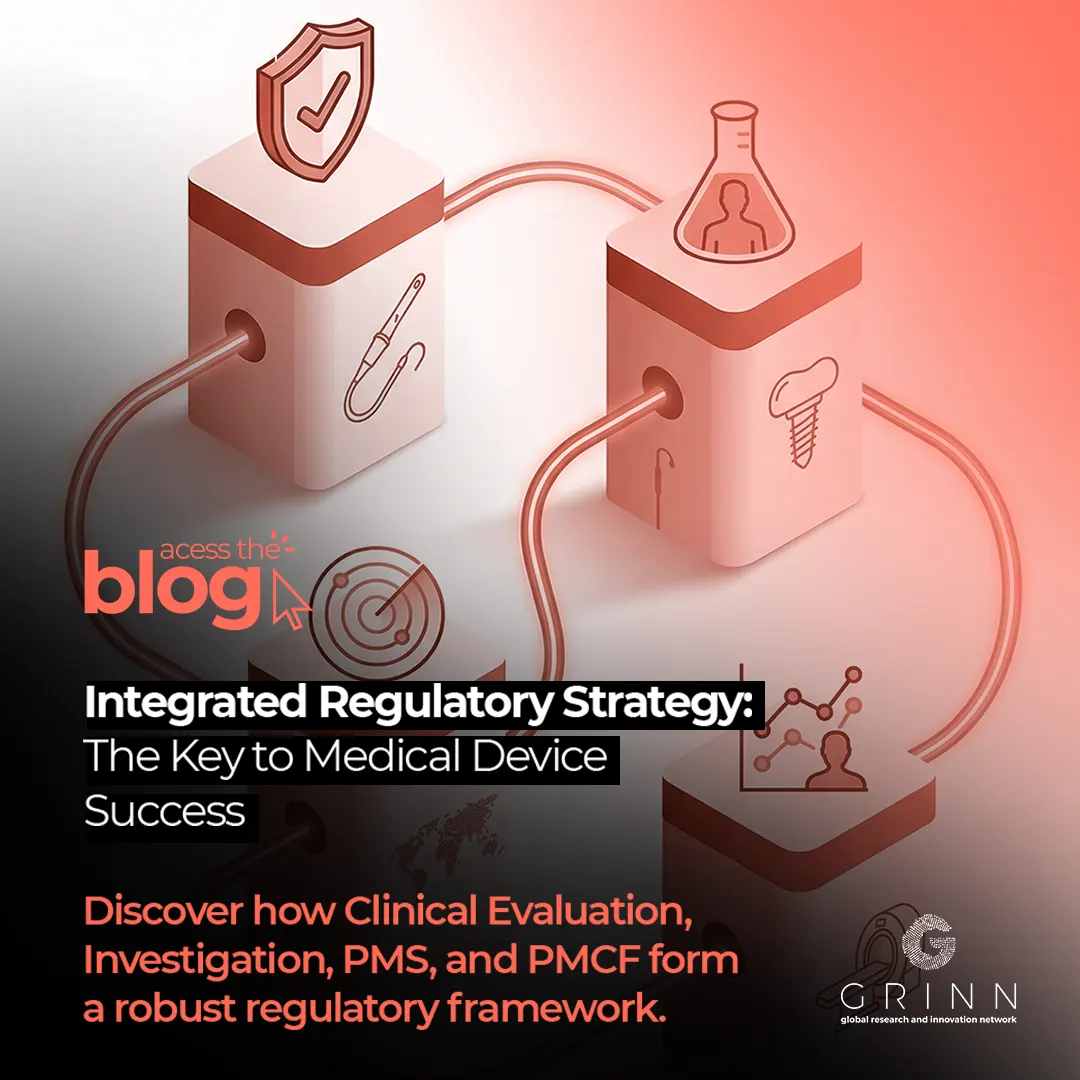
Although each of these services has its specific application, the true value lies in how they connect. Clinical Evaluation establishes the initial evidence base, Clinical Investigation fills gaps when necessary, PMS ensures continuous monitoring, and PMCF deepens the generation of clinical data post-market. When applied in an integrated manner, these four pillars not only meet regulatory requirements but also strengthen product credibility, reduce risks, and contribute to more assertive decisions throughout its entire life cycle. Thus, relying on specialized support to structure and conduct these activities can be a strategic differentiator, ensuring that each step is executed with technical rigor and alignment with current regulations.
GRINN's great differential lies in how these pillars are managed. When each stage is treated in isolation, it is common to have rework, inconsistencies between documents, and loss of strategic opportunities throughout the process. On the other hand, when all these services are developed in an integrated way, by a team that accompanies the product from the initial phases to post-market, the result is a much more consistent, efficient, and aligned vision with regulatory requirements.
It is precisely at this point that having a specialized partner makes a difference. By offering all these services in a structured and continuous manner, GRINN acts not only in technical execution but also in building a complete regulatory strategy. This accompaniment allows anticipating risks, aligning evidence from the beginning, and ensuring that all stages, from clinical data generation to post-market monitoring, are cohesive.
In practice, this translates into more agile processes, lower risk of non-conformities, and a more robust regulatory positioning for your device. More than meeting requirements, it's about building a solid foundation that sustains product success throughout its entire life cycle.