
Brazil: A Hub for Medical Device Innovation
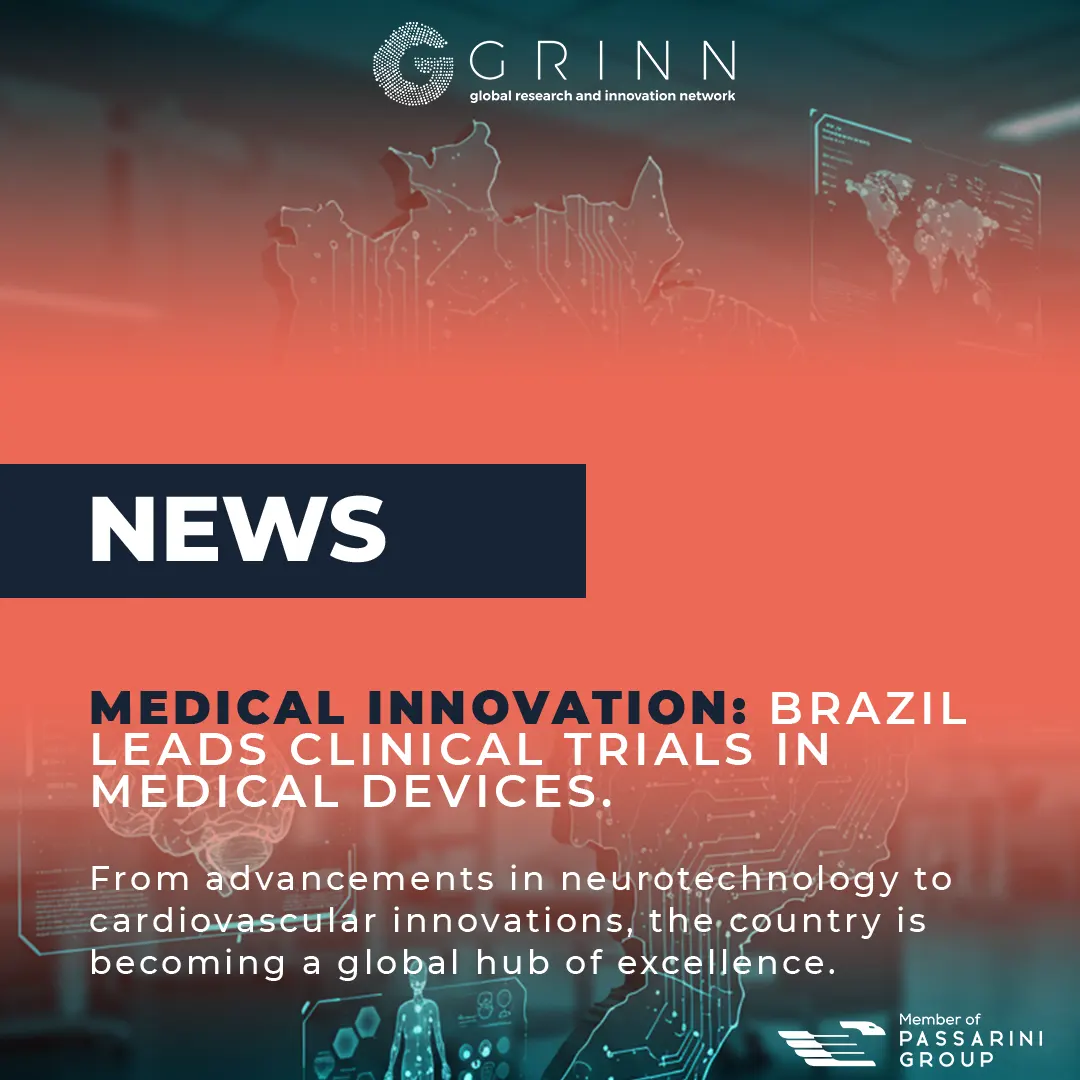
Brazil is rapidly establishing itself as a center of excellence for medical device research and innovation. Driven by a more agile regulatory environment and a diverse patient population, the country is positioned as a strategic destination for manufacturers looking to test and develop cutting-edge technologies. The recent approval of Law 14.874/24 and RDC 837/2023 by ANVISA has simplified the process for clinical trials, making Brazil a leader in medical innovation in Latin America. This transformation opens doors for more efficient clinical studies while maintaining the highest standards of safety and patient protection.
Proven Innovation: Examples of Research Success
Brazil's research capabilities are exemplified by several high-impact studies that have already achieved significant breakthroughs. The BrainGate-Brazil study at the Federal University of São Paulo (UNIFESP) is a milestone in neurotechnology, evaluating a brain-computer interface that allowed patients with severe motor disabilities to control digital devices with thought alone. This project not only proved the success of neural signal decoding but also solidified Brazil's position as a key player in neurotechnology R&D.
Another notable example is the multicenter trial conducted by Hospital Sírio-Libanês for a new spinal cord stimulation device for chronic pain. The study, which involved multiple research centers across the country, demonstrated a significant reduction in pain and improved the quality of life for patients. The results led to ANVISA approval, establishing a new standard for pain management in the region.
Cardiovascular research has also been a highlight. The RESTORE trial, led by REVA Medical, and the BIOADAPTOR trial, from Elixir Medical, both at the Instituto Dante Pazzanese de Cardiologia, demonstrated the potential of new technologies to treat heart diseases. These studies validated the safety and performance of bioresorbable stents and bioadaptor systems, which promise to revolutionize the treatment of coronary artery disease.
Market Opportunities and Future Trends
The Brazilian medical device market is projected to grow at an annual rate of 7.4% until 2028, driven by an aging population and a growing demand for advanced solutions. Sectors such as in vitro diagnostics (IVDs), with an emphasis on molecular diagnostics and point-of-care testing, and orthopedic devices are in full expansion. Furthermore, Brazil's infrastructure, with a high density of CT scanners and MRI machines, offers an ideal environment for testing devices that improve diagnosis, monitoring, and treatment.
The rise of Artificial Intelligence (AI) and Digital Health is another promising trend. The AI in healthcare market in Brazil is growing exponentially, with ANVISA already establishing clear guidelines for AI-based medical software (SaMD). This facilitates the development and validation of AI-driven diagnostic and patient management tools that are revolutionizing the sector. The expansion of telemedicine, supported by these technologies, also improves access to healthcare, especially in remote areas.
Brazil is no stranger to medical innovations. The Jatene Procedure, for correcting transposed arteries in newborns, and the Cone technique for tricuspid valve repair, are historical examples of the country's contribution to global medicine. More recently, low-cost devices for diagnosing infectious diseases and portable retinal diagnostic equipment show the continuous capacity to innovate and develop accessible solutions.
The Strategic Advantage of Conducting Clinical Trials
The consistent growth of clinical trials, with a 25.42% increase in medical device studies from 2021 to 2024, demonstrates the country's growing appeal. The agility in regulatory processes, with the exemption from prior ANVISA approval for high-risk trials (when the results are not for future registration in Brazil), speeds up the recruitment phase.
Additionally, Brazil offers a significant cost advantage, with clinical trials costing 25% to 35% less than in the U.S. Patient recruitment is faster, and the retention rate is higher than the global average. The diversity of the Brazilian population is an invaluable asset for generating clinically relevant data that meets the rigorous inclusion requirements of agencies like the FDA.
How Grinn Company Can Help
At Grinn Company, we are a CRO (Contract Research Organization) with a deep understanding of the Brazilian clinical research ecosystem. We are your strategic partner for navigating this promising landscape. Our mission is to accelerate healthcare advancements through faster and more efficient clinical trials.
Grinn Solutions for Medical Device Manufacturers
- Specialized Regulatory Consulting: We help you understand and navigate ANVISA's complex regulations, ensuring your clinical trials meet all legal and compliance requirements, including new laws and regulations for high-risk devices.
- Project Management and Monitoring: We offer full support, from protocol development to data management and study monitoring, ensuring data integrity and compliance with Good Clinical Practices (GCP).
- Strategic Partnerships: We facilitate connections with Brazil's leading research centers and hospitals, such as the Instituto Dante Pazzanese and InCor, to accelerate patient recruitment and study execution.
- Cost and Timeline Optimization: Our technological approach and local knowledge allow us to optimize workflows, significantly reducing the costs and timelines of your projects.
- Expertise in Various Therapeutic Areas: We have expertise in cardiology, neurotechnology, orthopedics, and other specialties, ensuring your trial is conducted by professionals with a deep understanding of your target market.