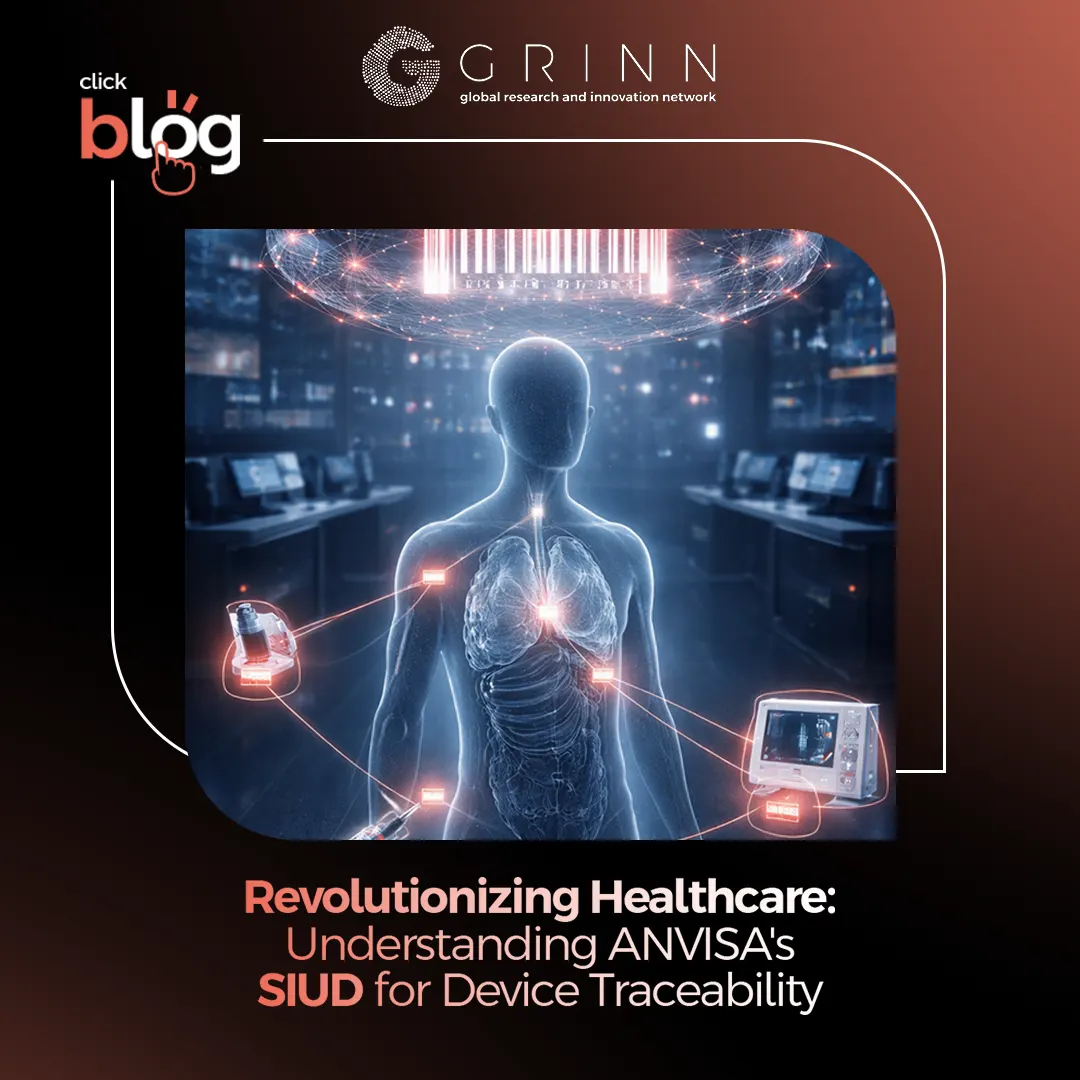
Implementation of the Unique Medical Device Identification System (SIUD) by ANVISA: A New Era in Device Safety and Traceability in Brazil The Food and Drug Administration (FDA) is responsible for protecting public health by ensuring the safety, efficacy, and security of human and veterinary drugs, vaccines and other biological products, medical devices, the nation?s food supply, cosmetics, dietary supplements, and products that emit radiation.
The Federal Food, Drug, and Cosmetic Act gained the addition of section 519(f), which instructs the FDA to issue regulations establishing a unique device identification system for medical devices. On September 24, 2013, the FDA published a final rule establishing a unique device identification system (the UDI Rule).
Now fully implemented, the Unique Device Identification System offers a range of benefits to the industry, the FDA, consumers, healthcare providers, and healthcare systems by:
Allowing more accurate reporting, reviews, and analysis of adverse event reports so that problematic devices can be identified and corrected more quickly.
Reducing medical errors by allowing healthcare professionals and others to more quickly and accurately identify a device and obtain important information about its characteristics.
Enhancing device analysis in the market by providing a standardized and clear way to document device use in electronic health records, clinical information systems, claims data sources, and registries. A more robust post-market surveillance system can also be utilized to support the pre-market approval or clearance of new devices and new uses of currently marketed devices.
Providing a standardized identifier that will allow manufacturers, distributors, and healthcare facilities to manage medical device recalls more effectively.
Providing a foundation for a secure, global distribution chain, helping to combat counterfeiting and diversion and to prepare for medical emergencies.
Leading to the development of a globally recognized medical device identification system.
The internalization of UDI into ANVISA's regulations was launched by Collegiate Board Resolution (RDC) 591, of December 21, 2021. The regulation determined that the Agency should develop a national database for storing and consulting UDI information for each medical device registered in Brazil, a task considered a strategic priority by the Agency, integrating the 2024-2027 Strategic Plan (Strategic Project 02).
In this regard, as the development of the database approaches completion, which will be made available with the entry into force of the normative instruction subject to Public Consultation (CP) 1.313/2025, the time has come to disclose to the sector and society the preliminary version of the Unique Medical Device Identification System (SIUD) User Manual.
The implementation of SIUD was accompanied by the publication of various documents and resources aimed at guiding the sector on the structuring and use of UDI data. Among the publications, highlights include the SIUD User Manual, updated on June 29, 2025, which serves as the main reference for using the system; the Manual for Data Structuring and Transmission, a preliminary version from August 4, 2025, which provides guidelines on how to organize and submit information to SIUD; Annex I ? Batch Submission Samples, published on August 2, 2025, presenting practical examples of batch data submission; and the Profiled Resources for SIUD UDI Data ? Sample, made available on June 27, 2025, which exemplify the structuring of data resources.
It is worth noting that these resources are samples, published with the objective of providing an initial contact with data structuring, with the current version and complete "code systems" available within SIUD itself. Finally, the Interface Fields x SIUD UDI Resources Reference Table, current version from June 29, 2025, offers a guide to relate interface fields with the system's UDI resources. These documents and resources aim to facilitate SIUD adoption, ensure correct data submission, and prepare users for the full implementation of the system, strengthening the traceability and safety of medical devices in the Brazilian market.
The transition to SIUD is not merely a change in labeling; it is an evolution in data intelligence and regulatory governance for your product in Brazil. With strategic deadlines and a rigorous technical framework required by RDC 591/2021 and CP 1,313/2025, precision in data submission is what defines the success of your operation.
At GRINN, we operate at the forefront of this implementation, assisting your company in interpreting complex manuals, structuring bulk data uploads, and ensuring total compliance with ANVISA?s new database.
Do you need specialized support to align your portfolio with the SIUD system, or do you have questions regarding the technical structuring of your data? Our team of experts is ready to guide your journey. Send an email to contact@grinn.co and let?s ensure the traceability and safety of your device in the global market.